The Tank That Was Never Meant to Succeed
The Crowded Nursery Tank Produces Basil Fast.
Andrew Aasen
7/3/20262 min read
The tank that produced my recent bumper crop was never supposed to be a production system.
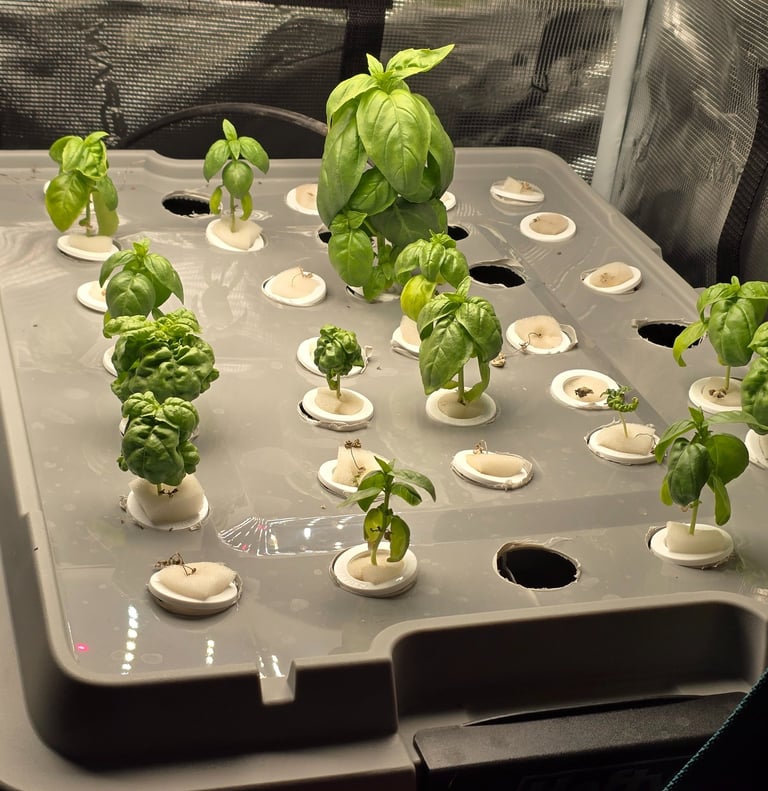
I built it because I needed somewhere to grow out seedlings while freeing up space in my plug tray. The long-term plan was to fill a 108-plant NFT rack, and I needed somewhere to keep young plants alive while I built up inventory.
To maximize space under the grow light, I used my smallest hole saw and packed the planting holes as closely together as possible. The tiny net pots were barely large enough for the seedlings, and the spacing was tighter than I would normally recommend.
Not every decision worked out.
At the time, the only plugs I could find in the right size were made of foam. I am not particularly fond of foam plugs, but I convinced myself they might help keep the roots warm. Instead, they seemed to do the opposite. Growth slowed dramatically, and the seedlings spent months doing very little.
Everything changed when I transplanted the survivors into the tank.
The plants that adapted to the light and survived the move began to thrive. One Genovese basil plant, sitting slightly off center, quickly became the dominant plant in the system. Three weeks ago, it was growing so aggressively that I had to prune it before it reached the lamp.
That single pruning changed everything.
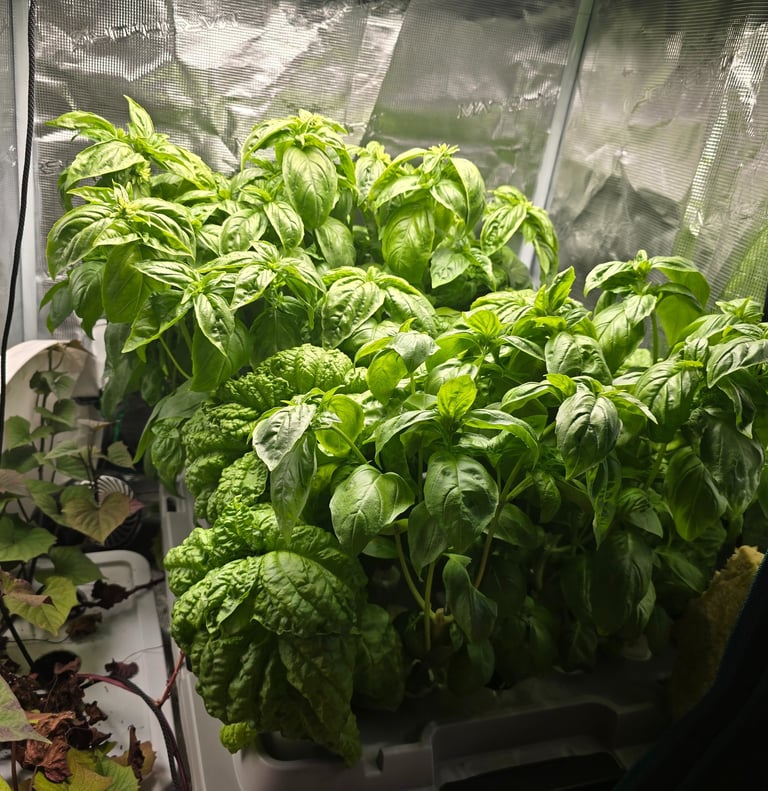
Once the dominant growing tip was removed, the plant branched heavily, and the neighboring basil plants responded with a surge of growth of their own. The crowded tank suddenly became a sea of new shoots and leaves.
The irony is that these plants should probably have been moved into their permanent home weeks ago. Instead, they remained crowded together, competing for light and space. Under many circumstances that would be a problem.
In this case, the competition may have worked to my advantage.
The result was the bumper crop I showed in my last post: nearly twelve cups of basil harvested from a system that was never intended to produce that much in the first place.
The dominant plant is still thriving, now wider instead of taller, and the rest of the tank is already pushing fresh growth. What started as a temporary holding area has become an unexpected lesson in how basil responds to pruning, competition, and a little bit of neglect.
More on that next time.